
Kedarkantha Trek Review – Route, Experience, Difficulty & Tips
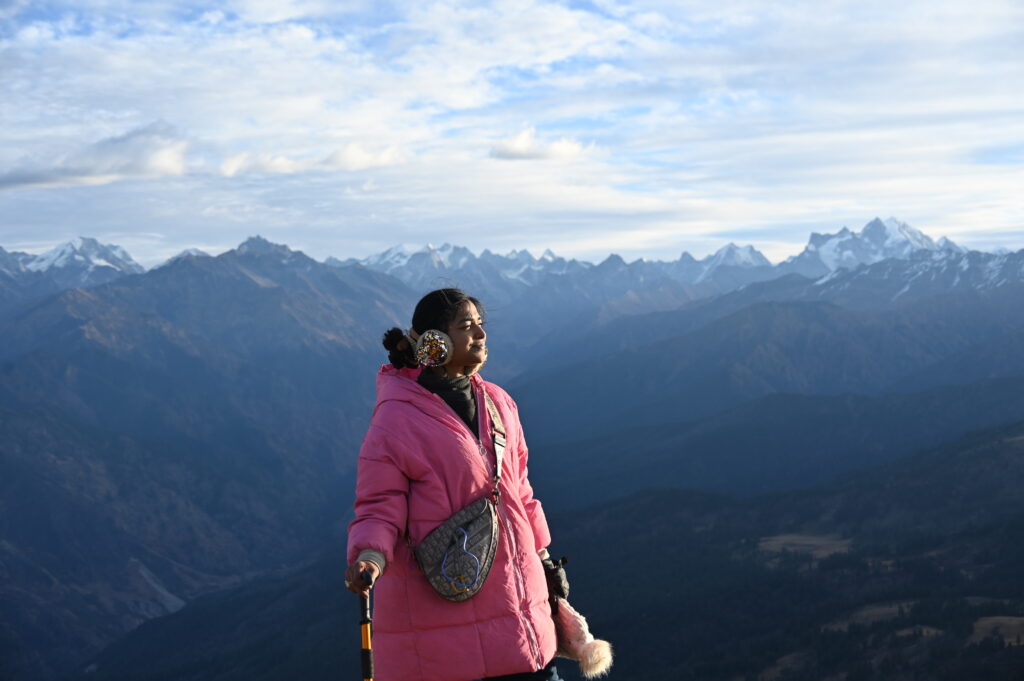
Kedarkantha trek is considered one of the best winter treks of India. So, I myself wanted to experience it and decided to go on this trek on December 2025. Hello, I’m Tanya Biswas, from a beautiful hill station- Manali. Here in this article, I’m going to share my personal experience, trek details, difficulties, best time to visit and honest review if you should actually visit, specially if you’re a first time trekker. On December 18, 2025, we arrived in Dehradun from Manali and spent one night in Dehradun, near the well-known Prince Chowk which was going to be our pick-up point next morning. Day 1: On the morning of the 19th, we checked out to head to our destination, Kotgaon Village, so we took a traveler bus directly from Prince Chowk. We boarded the bus around 7 AM, and during the journey, we had our breakfast at Kempty Falls, which is situated at a higher elevation above Dehradun. Mountain switchbacks were significantly challenging, requiring both physical and mental endurance. From Kempty Falls, roadways were under construction; therefore, sometimes we had to walk some distances. However, that never bothered us as the whole team was mentally prepared for the trek. We passed through Naugaon, Damta, and Purola after Kempty Falls. During our journey we played random games, sung songs of different genres, covered almost the most awaited distance, supporting and motivating each other at every step. We finally had our lunch near Derika village at 4:30 pm. From there we continued our journey and reached Kotgaon situated in Govind National Park, the base of Kedarkantha Trek, to spend the night of December 19th in a homestay. Around 11 pm, after an intense discussion, Mr. Pratham, our team leader, briefed us about our trail run and also instructed us about a few dos and don’ts that we must follow during the whole trek. Day 2: Our group, led by Pratham Sir, prepared to begin Kedarkantha trek from Sankri village, 5 Km from Kotgaon, to Juda ka Talab early on the 20th morning shortly after breakfast. Each of us packed our own backpacks with essential equipments for the trek, such as head torch, a trekking pole, jackets, crampons, and trekking shoes. We left our homestay at around ten in the morning and arrived at Sankri village precisely at ten fifty-three. We began our trail from Sankri. Our objective was to get to Juda Ka Talab, which is around 4 kilometers from Sankri Village, before dawn. Since the majority of us were unfamiliar with this terrain, the chosen route presented some unexpected challenges that truly forced us to pick up new hiking skills and life lessons. We were walking through a tropical deciduous forest that was teeming with long, massive coniferous trees, shrubs, and herbs. Such metal roads did not exist. Therefore, the non-metal roads we were traveling on were made up of both large and small naturally weathered rocks. A few were shaped by hand to guide us through the foothills. Additionally, we traversed a riverbed, steep peaks, and a vast expanse of dry grassland, dense oak and rhododendron forests, open meadows, frozen lakes, and breathtaking mountain vistas (Swargarohini, Gangotri, Bandarpoonch). We arrived at our destination by 4 p.m., performed some post-workout exercises as instructed by our team leader to prevent muscle sprains, and then we all got up to share lunch. We took two tea breaks during the trail, took pictures to preserve the memories, and danced as a group to commemorate our first day’s success. We finish our lunch at around 7:30 p.m., and Mr. Pratham sir briefs us on the plan of action, promising to begin trekking early the following day in order to arrive at the base on time. Day 3: As usual, on the third day, right after breakfast, we prepare for our next stop, ‘the base’ of Kedarkantha Trek, which is located 4 km above the Juda Ka Talab at a slightly higher altitude. Our team leader, led us to the location known as Hargaon, where we were able to take some amazing pictures with a broad perspective of mountain ranges. He also spoke to us about those peaks, saying that while Swargarohini (often referred to as Swarnamani in the local context), Bandarpunch massif (with its peaks like Kalanag/Black Peak), and Trishul are all significant Himalayan peaks in Uttarakhand that form a prominent range, they are not usually in a single straight line from one particular viewpoint. Instead, they are geographically close, part of the Garhwal Himalayas, and offer breathtaking, interconnected views, particularly Black Peak and Bandarpunch, which are neighbors. Additionally, Sir shared with us an intriguing myth from the local indigenous population. According to them, Kedarkantha means “Throat of Lord Shiva,” derived from local myths in which Lord Shiva meditated here in response to Lord Narayana’s request to cure his blue throat, which had been caused by poison he had consumed during Samudra manthan We stayed there for a while before moving on to the base. took a quick tea break in between. We arrived at the base at about 4 PM. To prevent cramping in our muscles, we worked out. We were then given our individual tents right away so that we could rest because we were all exhausted. We had tea and samosas as snacks at around six o’clock in the evening. We finished our dinner by 8 p.m. so that we could all go to bed early and wake up at 2 a.m. the following day to travel to “the summit,” our final destination. Day 4: The most difficult yet fruitful day. In order to witness the sunrise, the summit push typically starts early in the morning. The sunrise of Kedarkantha Trek is one of the best highlights . The trail is difficult and steep, particularly in deep snow. The last climb to the top is a real endurance test. You are rewarded with a breathtaking 360-degree view of mountain peaks, including Black Peak, Bandarpoonch, and Swargarohini, when you reach the summit. After
Hello world!
Welcome to WordPress. This is your first post. Edit or delete it, then start writing!